
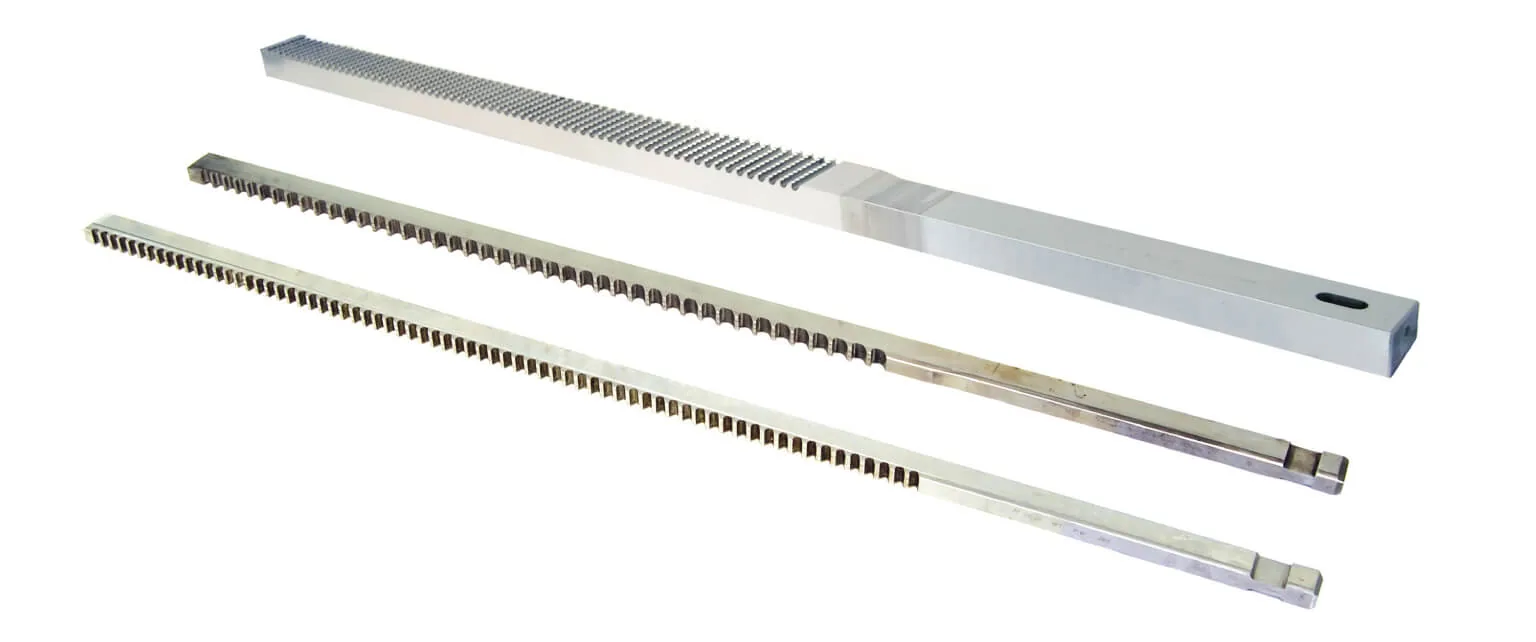
Keyways are one of the simplest-looking yet most functionally important features found in rotating machinery. This guide explains exactly what a keyway broach is, how the keyway broaching process works, and what to consider when sourcing keyway broaching tools for your manufacturing operation.
In This Article
What Is A Keyway Broach?
A keyway broach is a precision cutting tool used to machine a straight, rectangular slot — called a keyway — inside a bore. The keyway allows a separate component called a key to be inserted between a shaft and a mating hub, gear, pulley or coupling, locking the two parts together so they rotate as a single assembly and transmit torque without slipping relative to one another.
Unlike spline broaches, which generate a complex multi-tooth profile around the full circumference of a bore, a keyway broach cuts a single, simple slot. But "simple" doesn't mean "easy to get right" — the width, depth, parallelism and position of that slot relative to the bore's centreline must all stay within tight tolerance for the finished assembly to function reliably.
How Keyway Broaching Works
Keyway broaching is typically performed on a vertical or horizontal broaching press, following this general sequence:
- Component Setup — The workpiece, which already has a finished bore, is mounted over a guide bushing matched to that bore's diameter.
- Broach Insertion — The keyway broach is positioned through a slot machined into the guide bushing and aligned with the bore.
- Cutting Stroke — The broach is pushed or pulled through the bore in a linear stroke (sometimes requiring multiple passes for deeper or harder-material keyways), with progressively sized teeth cutting the keyway to its final width and depth.
- Inspection — The finished keyway is checked using keyway gauges or precision measurement to confirm it meets the specified width, depth and tolerance.
The Role Of Guide Bushings
A guide bushing is a precisely machined sleeve that fits the bore diameter and includes a slot matching the broach's profile. Its job is to keep the broach centred and properly aligned as it travels through the cut, preventing the tool from drifting sideways — which would otherwise produce a keyway that's off-position relative to the bore's centreline, potentially causing fitment issues with the mating key and shaft.
Because the bushing and broach work together as a system, many manufacturers — including United Broach Company — supply matched broach-and-bushing sets rather than standalone tools, ensuring the customer receives a complete, ready-to-use keyway broaching solution rather than having to separately engineer a compatible bushing.
Need A Keyway Broach & Matched Bushing Set?
United Broach Company manufactures precision keyway broaches and corresponding guide bushings engineered to your exact bore and keyway specification.
View Our Keyway Broach CapabilityKeyway Broach Design Considerations
Several factors shape keyway broach design and material selection: the keyway width and depth (typically defined by standard keyway tables or a custom drawing dimension), the bore diameter and depth, the workpiece material and hardness (which influences the choice between HSS and carbide-tipped construction), production volume (driving tool life requirements), and the required surface finish on the keyway's cut faces. Getting these parameters right at the design stage avoids costly rework or premature tool wear down the line.
Common Applications
Keyway broaches are used wherever a shaft must be positively locked to a rotating component. This includes gear hubs in automotive and tractor transmissions, pulleys and sprockets in industrial power transmission systems, couplings in pump and electric motor assemblies, and numerous custom components across heavy engineering and defence manufacturing where a keyed shaft-hub connection is specified on the engineering drawing.
In electric motor manufacturing, for example, keyway broaching is commonly used to prepare the motor shaft bore for a coupling or pulley, ensuring the connected equipment receives torque reliably without slip. In tractor gearboxes, keyway broaching often works alongside spline broaching on the same component — a gear might have an internal spline on one section and a keyway feature on another, depending on the specific mating part it connects to at each end of the shaft.
Single-Pass vs Multi-Pass Keyway Broaching
For shallow keyways in softer materials, a single broaching pass is often sufficient to cut the slot to its full finished depth. For deeper keyways or harder workpiece materials, a progressive multi-pass approach may be used instead — either through a single broach with a longer progressive tooth section, or by passing the workpiece through a series of broaches of increasing size. The right approach depends on the cutting forces involved, the rigidity of the broaching machine, and the surface finish required on the finished keyway.
Choosing The Right Keyway Broach
When sourcing a keyway broach, it helps to work with a manufacturer who can supply the matched guide bushing alongside the tool, verify dimensional accuracy through proper inspection equipment, and offer reconditioning support once the tool eventually wears. These factors matter more for long-term production economics than the upfront price of the tool alone — a slightly more expensive broach that holds tolerance longer and is supported by a reliable reconditioning service often works out more cost-effective over its full service life.
An inaccurate or misaligned keyway can cause uneven load distribution on the key, leading to premature wear and, in rotating machinery, vibration and noise.
For components requiring more than a basic keyway — such as a non-standard slot shape or multi-feature internal profile — it's worth exploring custom profile broach manufacturing, which covers geometries that fall outside standard keyway and spline forms.
Related Reading
If you're evaluating whether broaching or an alternative process is right for your keyway or internal feature, see our broaching vs milling comparison. For a deeper technical look at spline manufacturing — often used alongside keyways in transmission components — read our guide on what a spline broach is and our internal spline manufacturing guide.