
United Broach Company offers professional broach reconditioning and re-sharpening services, restoring worn spline, keyway, internal and profile broaches to original cutting specification at a fraction of new tool manufacturing cost.
Broaching tools represent a significant capital investment for any manufacturer. United Broach Company's reconditioning service restores worn broaches to original cutting specification, helping customers extend tool life cycles and manage tooling costs without compromising on part quality.
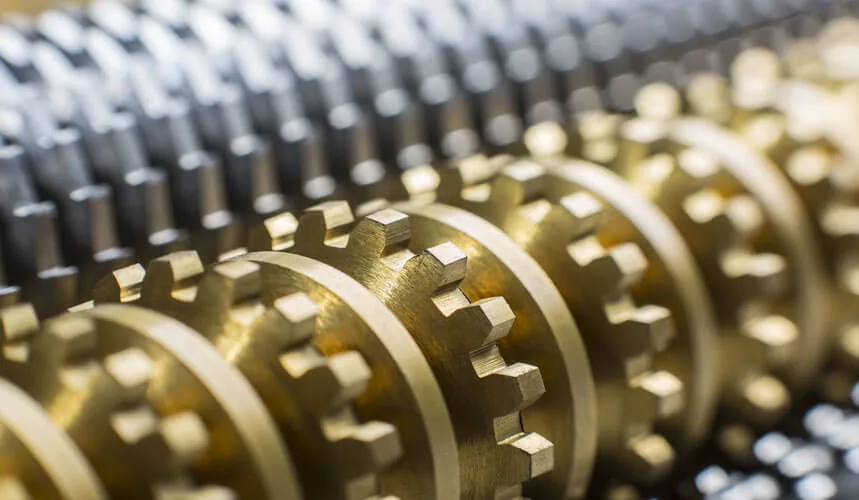
Every broaching tool — whether a spline broach, keyway broach, internal broach or custom profile broach — gradually wears with use. Cutting edges lose their sharpness, tooth profiles drift slightly out of tolerance, and surface finish on the machined parts begins to degrade. Reconditioning is the process of precision regrinding the tool's cutting teeth to restore the original profile, sizing dimension and edge sharpness, extending the broach's usable production life.
United Broach Company has reconditioned broaching tools for customers across automotive, tractor, transmission, defence and heavy engineering industries since 2005, applying the same precision grinding and inspection standards used in our new tool manufacturing process.
Recognising the early signs of broach wear helps prevent the production of out-of-tolerance parts and avoids unplanned downtime. Common indicators include:
Sending a broach for reconditioning at the first sign of these symptoms — rather than waiting until it fails completely — typically results in a more cost-effective restoration and avoids the risk of producing a batch of non-conforming parts.
United Broach Company follows a structured reconditioning sequence for every tool received:
United Broach Company reconditions spline broaches (internal and external, involute and straight-side), keyway broaches, internal broaches, and custom profile broaches — regardless of whether the tool was originally manufactured by United Broach Company or another supplier, provided sufficient material remains on the tool body to support regrinding and the original profile can be measured or referenced.
The number of reconditioning cycles a broach can undergo depends on its original design margin — specifically, how much extra material was built into the tooth height to allow for future regrinding. Tools designed with reconditioning in mind from the outset can often be reground multiple times before reaching the end of their usable life. Our technical team assesses each tool individually and advises customers on the remaining reconditioning potential before committing to a restoration.
For most customers, reconditioning costs a fraction of manufacturing a new replacement broach while restoring full cutting performance. For high-volume production operations running multiple broaching tools across various stations, a structured reconditioning programme — rotating tools through scheduled regrinding before they fail completely — can significantly reduce overall tooling expenditure while maintaining consistent part quality across the production line.
United Broach Company understands that a broach out of service represents a potential bottleneck in a customer's production line. We prioritise reconditioning turnaround to minimise downtime, and customers with recurring reconditioning needs can establish a standing arrangement for predictable, scheduled tool restoration that fits around their production planning.
Indicative reconditioning scope. Final assessment provided after tool inspection.
| Service Element | Details |
|---|---|
| Broach Types Serviced | Spline, Keyway, Internal, Profile (Any Manufacturer) |
| Process | CNC Profile Regrinding, Heat Treatment Verification |
| Inspection | Profile Projector, Gear Tooth Vernier Verification |
| Coating Options | TiN, TiAlN (PVD) Recoating Available |
| Tolerance Restoration | To Original Drawing / Measured Reference Specification |
| Gauge Recalibration | Available Alongside Broach Reconditioning |
Broach reconditioning services supporting continuous production across critical manufacturing operations.
Scheduled reconditioning programmes minimising unplanned downtime.
Extending broach life cycles to manage overall tooling expenditure.
Restoring surface finish and dimensional accuracy on worn tools.
Reconditioning broaches regardless of original manufacturer.
Applying advanced coatings during reconditioning for extended tool life.
Restoring older broaches where replacement tooling may be costly or slow to source.
Broach reconditioning services trusted across critical manufacturing sectors.
Trusted reconditioning expertise backed by the same precision standards used in new tool manufacturing.
Reconditioning performed under the same certified quality system as new tooling.
Prioritised scheduling to minimise your production downtime.
Every reconditioned tool verified against original specification.
A fraction of new tool manufacturing cost with full performance restoration.
PVD coating options to extend tool life beyond original specification.
We recondition broaches regardless of original manufacturer.
Common questions about our broach reconditioning service.
Broach reconditioning is the process of re-sharpening and restoring a worn broaching tool's cutting edges, tooth profile and dimensional accuracy through precision regrinding, extending the tool's usable life without requiring full replacement.
Common signs include declining surface finish on the machined component, increased cutting force or cycle time, visible wear or chipping on the cutting teeth, and parts beginning to drift toward the edge of their tolerance band. Sending the broach for inspection at the first sign of these symptoms helps avoid producing out-of-tolerance parts.
In most cases, yes. United Broach Company reconditions spline broaches, keyway broaches, internal broaches and profile broaches regardless of the original manufacturer, provided the tool body retains sufficient material for regrinding and the original profile can be measured or referenced from a drawing.
This depends on the broach's original design margin, tooth height and how much material has already been removed through prior regrinding. Our technical team can assess a specific tool and advise how many further reconditioning cycles it can reasonably support before replacement becomes necessary.
Yes. Reconditioning is performed to bring the tooth profile, sizing dimension and cutting edge sharpness back within the original drawing tolerance, verified through the same inspection process used on newly manufactured broaches.
Turnaround time depends on the broach type, condition and current workload, but reconditioning is typically significantly faster than manufacturing a new replacement tool. Contact our team with your broach details for a specific turnaround estimate.
In most cases, yes. Reconditioning typically costs a fraction of new tool manufacturing while restoring full cutting performance, making it an effective way to manage tooling costs across high-volume production operations.
Yes. We can apply PVD coatings such as TiN and TiAlN as part of the reconditioning process, which can improve wear resistance and extend the tool's life beyond what the original uncoated tool achieved.
Send us details of your broach and our technical team will provide a reconditioning assessment and quote.
Send us your broach reconditioning requirement for a technical evaluation and quotation.